 Landscape Photography
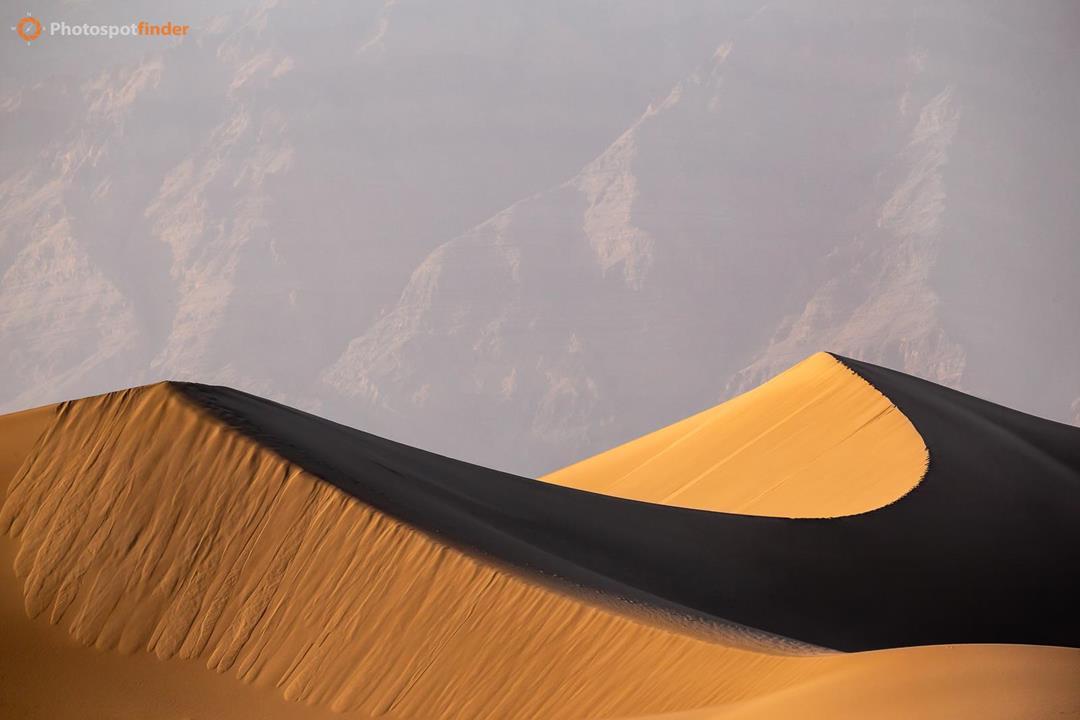
Sunset Contrast on the Mesquite Sand Dunes, Death Valley National Park
This photograph focuses on the Mesquite Sand Dunes in Death Valley National Park, using a long lens to isolate the sweeping ridgelines and sharply defined contours. The low angle of the setting sun creates a strong division between illuminated and shadowed slopes, revealing the fine textures and wind‑carved patterns that characterize these dunes. Warm light enhances the golden tones of the sand, while the shaded faces shift toward cooler hues, producing a natural gradient that emphasizes the sculpted geometry of the landscape. Distant mountains appear softened by atmospheric haze, adding depth without competing with the foreground forms. The Mesquite Dunes offer photographers a reliable setting for studying light behavior on desert terrain. Sunset often provides the most dramatic tonal separation, especially when using longer focal lengths to compress distance and highlight the interplay of shape and shadow. Compositions benefit from aligning the frame with the dune crests, allowing the ridgelines to function as leading lines. Avoiding footprints by working from elevated positions or selecting untouched sections of sand helps maintain the clean, abstract quality that makes this location a favorite for landscape work.

|
Canon EOS 6D 150-600mm F5-6.3 DG OS HSM | Contemporary 015 |
||

|
f/11.0 |

|
1/640 sec |

|
500 |

|
600 mm |