Best Landscape Photography Spots in San Juan Mountains, Colorado
Location & Landscape
The San Juan Mountains span southwestern Colorado, including parts of San Juan, Ouray, San Miguel, and Dolores counties. The range is characterized by rugged peaks, glacial valleys, alpine lakes, dense forests, and colorful rock formations. Elevations range from 7,000 to over 14,000 feet, offering dramatic vertical relief and varied photographic opportunities.Access is available via scenic highways, mountain passes, and forest roads, with trailheads leading to alpine lakes, valleys, and peaks. Seasonal changes significantly affect photography: summer offers wildflowers, clear skies, and accessible trails; fall brings golden aspen groves; winter provides snow-covered peaks and frozen lakes; and spring offers waterfalls, melting snow, and early blooms. Early morning or late afternoon light emphasizes mountain textures, reflections in alpine lakes, and the vivid colors of meadows and forests.
Top Photo Opportunities
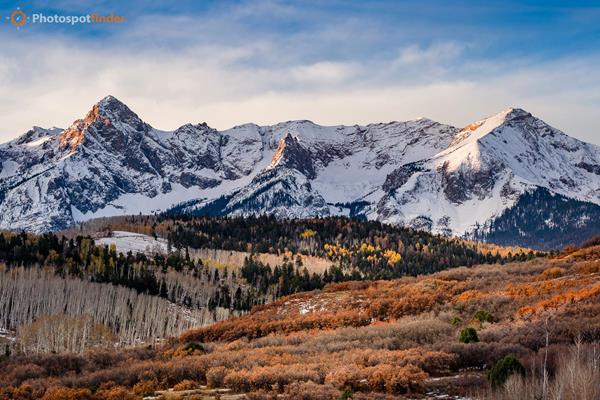
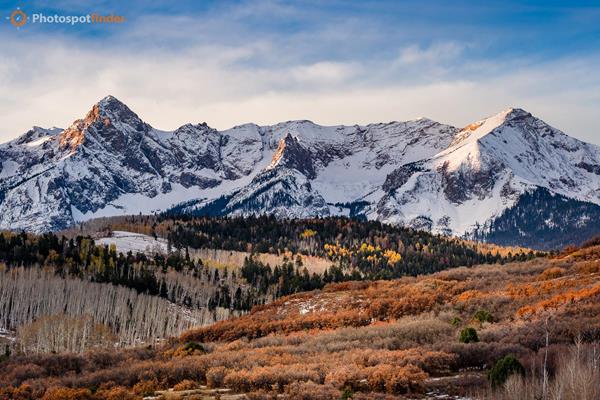
Dallas Divide: Dallas Divide, along Highway 62 between Ridgway and Placerville, is one of the most iconic viewpoints in the San Juan Mountains. The overlook offers a wide, unobstructed view of the Sneffels Range, with open ranchland and rolling hills forming a strong foreground. In autumn, aspen groves turn bright gold, creating a striking contrast against darker forests and rugged peaks. Sunrise is especially effective because soft light gradually illuminates the mountains, enhancing depth across the valley. Sunset adds warm tones and longer shadows that define the terrain. Weather changes, such as low clouds or passing storms, add atmosphere and variation, making it worthwhile to revisit the location under different conditions.Million Dollar Highway (US 550): The Million Dollar Highway between Ouray and Silverton offers continuous access to dramatic mountain scenery, with numerous designated pullouts for safe stops. Each viewpoint shows a slightly different perspective, from steep canyon walls to distant jagged peaks. Early morning light cast contrasting shadows on illuminated ridgelines and shadowed valleys. Late afternoon light enhances textures on exposed rock faces. Elevation changes along the route let photographers capture various compositions within a short distance.
Engineer Pass & Cinnamon Pass: Engineer Pass and Cinnamon Pass provide access to high-elevation viewpoints with expansive views of alpine basins, sharp ridgelines, and historic mining remnants. These locations require high-clearance vehicles. The elevation offers wide, unobstructed perspectives in multiple directions. Sunrise and sunset are the best times because low-angle light emphasizes terrain contours and creates long shadows across valleys. Scattered clouds often interact with the peaks, adding depth and movement to compositions. Designated pull-off areas allow photographers to stop and explore short distances on foot, adjusting angles to refine framing. Including winding roads or mining structures can introduce leading lines and context.
Ouray Overlook & Box Canyon: The Ouray Overlook offers a high vantage point above the town with views of steep canyon walls and surrounding peaks. Nearby, Box Canyon is a more enclosed space where a waterfall flows through narrow rock formations. At the overlook, early morning light reveals layers of terrain, while late afternoon shadows add depth and structure. Inside Box Canyon, diffused or overcast light works best to reduce harsh highlights on the water and rocks. Walkways lead to viewpoints where the waterfall can be framed against rock walls.
Red Mountain Pass: Red Mountain Pass along US 550 is known for its distinctive red and orange rock formations that stand out against the alpine scenery. Designated viewpoints offer clear sightlines toward Red Mountain and nearby ridges. Sunrise and sunset are the best times because low-angle light intensifies natural colors and highlights surface textures. The area also includes historic mining remains that add context to compositions. Slight repositioning along the roadside lets photographers adjust framing and alignment with surrounding features. Weather conditions like clouds or fog can add mood and variation.
Weminuche Wilderness Trails: Trails within the Weminuche Wilderness lead to remote alpine lakes, open meadows, and rugged mountain terrain, offering secluded photography opportunities. Access usually requires moderate to long hikes. The resulting locations provide clean compositions with minimal human presence. Specific lakes along established trails serve as strong focal points, especially during calm mornings when reflections appear. Sunrise and sunset offer soft, even light that enhances natural colors and reduces harsh contrast. Foreground elements like wildflowers, streams, or trail paths create depth and guide the viewer through the frame.
Photography Considerations
Foreground elements such as alpine lakes, wildflower meadows, aspen groves, and historic mining structures help anchor compositions. Leading lines can be created by ridgelines, rivers, trails, or mountain roads. Weather in the high-altitude San Juans is unpredictable; dramatic clouds, fog, or storms can enhance a scene. Sunrise and sunset provide the most dynamic lighting, while snow, ice, or autumn foliage offer unique textures and colors.Recommended gear includes wide-angle lenses for panoramic vistas, telephoto lenses for distant peaks, and a tripod for long-exposure or low-light shots. Polarizing filters reduce glare and enhance sky and water colors, while neutral density filters allow for balanced exposures between highlights and shadows. Patience is essential for capturing optimal light, cloud formations, or wildlife activity. Exploring multiple angles from passes, trailheads, and overlooks maximizes compositional variety.
Visitor Tips & Key Notes
Visit early morning or late afternoon to capture the best light. Trails range from easy lakeside walks to strenuous alpine hikes; layered clothing, sturdy footwear, and water are essential. Seasonal conditions vary greatly: summer offers accessible high passes and wildflowers, fall provides golden aspens and warm light, winter delivers snow-covered peaks and frozen lakes, and spring brings waterfalls and melting snow.Photographers can explore scenic highways, alpine lakes, mountain passes, and historic towns for diverse perspectives. Revisiting locations under different weather, seasonal, or light conditions increases compositional variety. Use our interactive map, images, and other resources to plan efficient photography sessions. Sharing experiences or insights in our comment section helps other photographers discover new angles and enjoy the San Juan Mountains’ dramatic and colorful landscapes.