Best Landscape Photography Spots in Badlands National Park
Location & Landscape
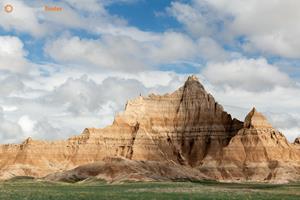
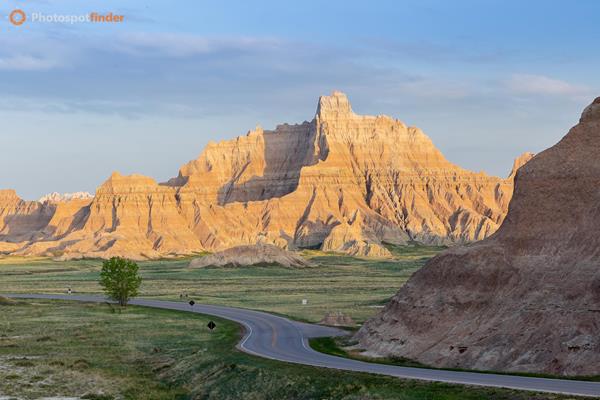
Badlands National Park sits in southwestern South Dakota, about 75 miles east of Rapid City. Since becoming a national park in 1978, it has protected one of the largest mixed-grass prairies in the country, along with its unique badlands formations. The landscape features eroded buttes, pinnacles, and spires made of layered rock in shades of tan, red, yellow, and gray. To help visitors explore these dramatic features, Badlands Loop Road winds through the North Unit, offering easy access to scenic overlooks and popular trailheads for photographers. In addition to the Loop Road, boardwalks and paved paths lead to more viewpoints, while several hiking trails invite visitors to get a closer look at the formations. Because the weather and lighting can change quickly across the open land, sunrises and sunsets often cast dramatic shadows on the ridges. Meanwhile, storms and moving clouds add depth and atmosphere to the wide prairie views.Top Photo Opportunities
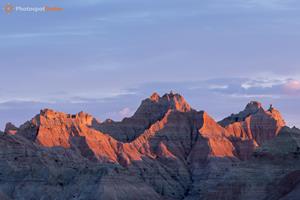
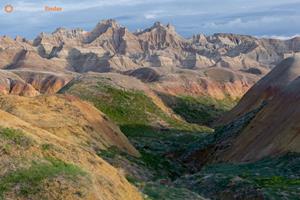
Big Badlands Overlook: Big Badlands Overlook is one of the park’s most famous viewpoints, with wide views of jagged ridges, deep ravines, and layers of rock. A short, paved path takes you from the parking lot to several platforms where you can look out over a basin filled with sharply eroded buttes. This spot is great for wide-angle photos that show the repeating ridges stretching to the horizon. In the early morning, the light brings out the textures and creates long shadows, making the landscape look even more dramatic. Many photographers check out both sides of the overlook to find different ways to frame the ridgelines and the open prairie beyond.Yellow Mounds Overlook: Yellow Mounds Overlook is one of the park’s most colorful spots. Here, you’ll see bright bands of yellow, orange, and red in the hills, formed by minerals changing over time. A short boardwalk circles the mounds, offering several places to take photos from different viewpoints. The bold colors stand out against the pale badlands in the distance. In the late afternoon, the sunlight makes the warm colors even richer and highlights the hills' curves. You can focus on close-up shots of the colors and textures or capture wider views that show the mounds alongside the prairie.
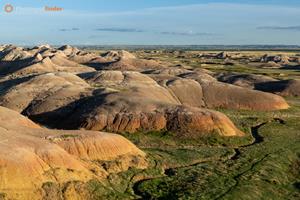
Panorama Point: Panorama Point gives you a high vantage point with wide views of the Badlands, making it a great spot for landscape photos. From here, you can see distant buttes, rolling prairie, and the winding shapes of the Badlands below. The height helps you create photos with strong depth, especially if you use the rocky slopes near the overlook as a leading line. Sunrise and sunset are the best times to visit, when the low light brings out dramatic contrasts on the ridges and in the valleys. Clouds often add even more atmosphere, stretching across the landscape to the horizon.
Notch Trail Overlook: At the end of the Notch Trail, you’ll find a stunning view of the White River Valley and the Badlands formations. The trail features a steady climb to a cliff-edge overlook, where photographers can take in the rugged scenery below. From this high spot, you can see layers of ridges and winding gullies that make for striking photos. In the late afternoon and at sunset, the rocks glow while the valley floor slips into shadow, creating bold contrasts. Many photographers stop at different points along the trail to capture unique angles of the landscape before reaching the final overlook.