Best Landscape Photography Spots in Arches National Park
Location & Landscape
Arches National Park, established in 1971, lies just north of Moab in eastern Utah on the Colorado Plateau. The park covers over 76,000 acres of high desert terrain with red sandstone fins, balanced rocks, and more than 2,000 natural arches formed by erosion. Elevations range from about 4,000 to 5,600 feet, offering varied views across desert basins and elevated points. The main park road provides access to most major sites, with paved pullouts and maintained trails leading to key formations. Summers are hot and dry. Spring and fall offer moderate temperatures and dynamic skies. Winter can bring snow, adding contrast to the red rock formations. Early morning and late evening light enhance textures and cast long shadows across the landscape.Top Photo Opportunities
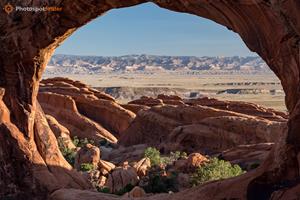
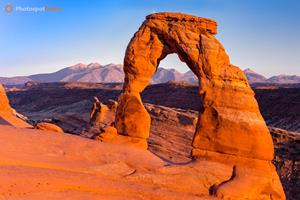
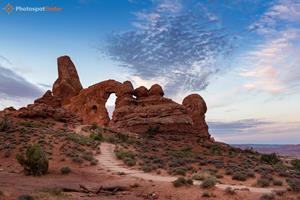
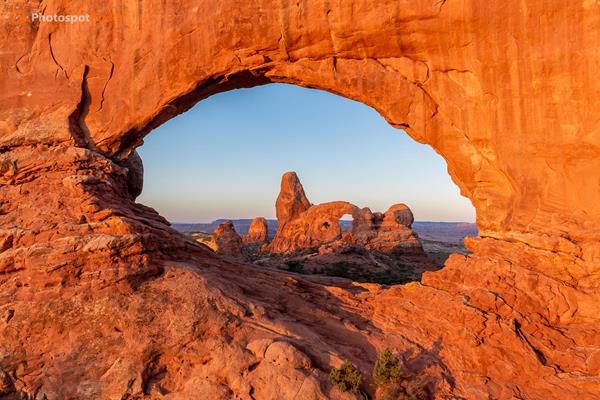
Delicate Arch Viewpoint Trail: The Delicate Arch viewpoint along the Delicate Arch Trail is the most recognized composition in the park, offering a clear sightline to the freestanding arch framed by distant mountains. The lower viewpoint provides an accessible angle. The upper viewpoint is accessible via a short uphill walk for a more elevated perspective. Sunset is the best time, as warm light intensifies the sandstone’s color and silhouettes the arch against the sky. Patience is essential due to crowds, and slight positioning changes can refine the composition.Turret Arch and North Window – Windows Section: Located in the Windows Section, Turret Arch aligns visually with the North Window, allowing layered compositions that include multiple arches in a single frame. The short loop trail offers several vantage points, including direct framing through the North Window toward Turret Arch. Sunrise light enters the openings, illuminating inner surfaces and creating contrast with the surrounding rock. Slight shifts in angle reveal different alignments and depth relationships between formations. Revisiting in the late afternoon provides side lighting that enhances texture across the fins.
Landscape Arch – Devils Garden Trail: Landscape Arch, one of the longest natural arches in the world, is accessible via the Devils Garden Trail. The path leads to a frontal view where the arch spans a wide opening with minimal vertical thickness. Morning light evenly illuminates the arch, while later shadows define its delicate structure. The surrounding area includes formations such as Navajo Arch and Partition Arch, each offering distinct compositions. Moving along the trail offers chances to frame the arch with foreground elements and experiment with scale. Different lighting conditions significantly change the perception of its span and fragility.
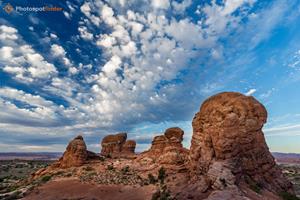
Park Avenue Viewpoint: The Park Avenue Viewpoint near the park entrance overlooks a corridor of towering rock walls and monoliths resembling an urban skyline. The main overlook offers a wide-angle view. A trail descending into the corridor allows ground-level compositions among the formations. Early morning light casts long shadows on the canyon floor, emphasizing depth and vertical scale. Late afternoon brings warmer tones to the rock faces. Exploring both elevated and lower viewpoints enables varied framing, from expansive scenes to intimate details of texture and erosion patterns.
Balanced Rock Pullout: Balanced Rock is located along the main park road with a dedicated pullout for immediate access to this iconic formation. The circular trail around the rock offers multiple angles, letting photographers isolate the formation against open sky or include surrounding desert features. Sunset light enhances the contrast between the large upper boulder and its narrow base. Twilight can produce clean silhouettes. Subtle repositioning changes the alignment of the rock with distant features, providing creative flexibility. Revisiting under different sky conditions can yield significantly different visual results.