Best Landscape Photography Spots in Alabama Hills, California
Location & Landscape
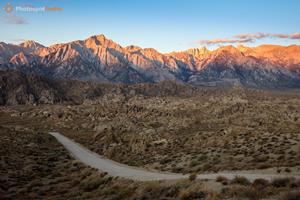
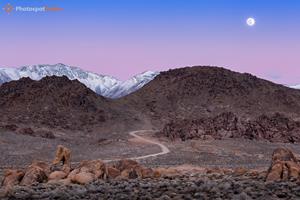
Alabama Hills lies in the eastern Sierra Nevada foothills, just west of Lone Pine. Its terrain features rolling desert hills, scattered boulders, and numerous natural arches. The nearby Sierra Nevada mountains, including Mount Whitney, create a dramatic backdrop, adding scale and grandeur to compositions.Access is primarily via Movie Road, which winds through the hills and provides numerous pullouts and trailheads to explore arches and boulder formations. Trails vary from easy walks to moderate climbs onto boulders for elevated viewpoints. Seasonal variations significantly impact photography: winter offers crisp clarity and occasional snow on the peaks, spring provides soft light and desert wildflowers, summer delivers long golden hours, and fall creates warm tones on rocks. Sunrise and sunset highlight textures and shadows, while moonlit nights offer exceptional astrophotography opportunities.
Top Photo Opportunities
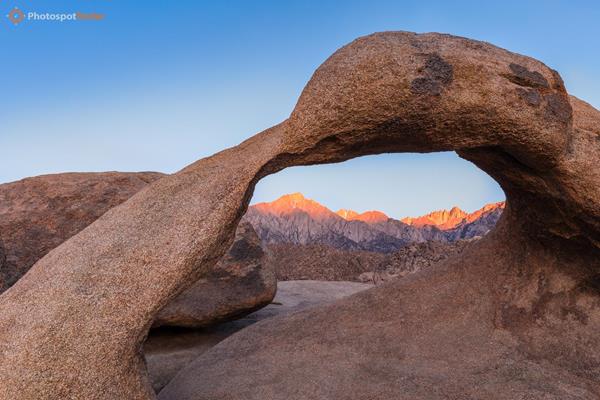
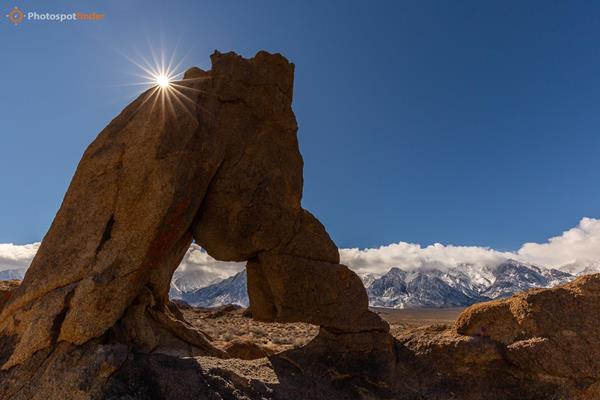
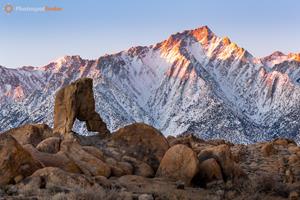
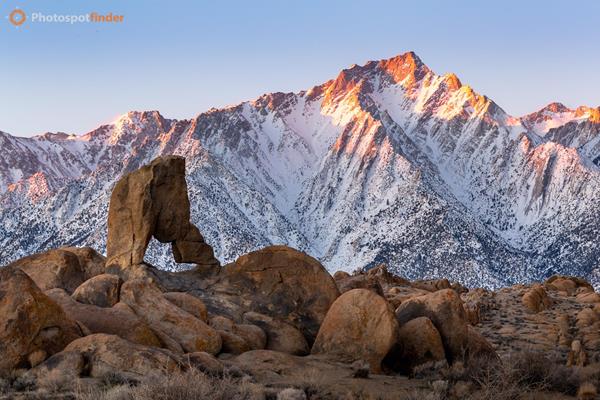
Mobius Arch: Mobius Arch is widely considered the signature frame of Alabama Hills, curving gracefully around Lone Pine Peak and Mount Whitney. The smooth granite opening creates a natural window that draws the eye straight to the Sierra Nevada. Arrive before sunrise to watch alpenglow ignite the peaks, or stay for sunset when warm tones deepen across the rock surface. Subtle shifts in position dramatically change the framing, rewarding careful composition and patience.Boot Arch: Recognizable by its boot-like outline, this formation offers playful and dynamic framing possibilities. Photographers can position distant peaks or glowing skies inside its opening for layered compositions. As the sun lowers, the arch’s contours become more pronounced, casting defined shadows that emphasize its shape. During sunset, it transforms into a striking silhouette against vivid desert color, making it ideal for bold, high-contrast imagery.
Lathe Arch: Smaller and more understated, Lathe Arch invites a quieter, detail-focused approach. Its narrow opening lends itself to simplified compositions that highlight line, form, and negative space. Soft morning light gently reveals texture in the granite, while evening light increases contrast between illuminated rock and shadowed desert floor. Because it lacks the scale of larger arches, thoughtful framing and lens choice are key to making it visually compelling.
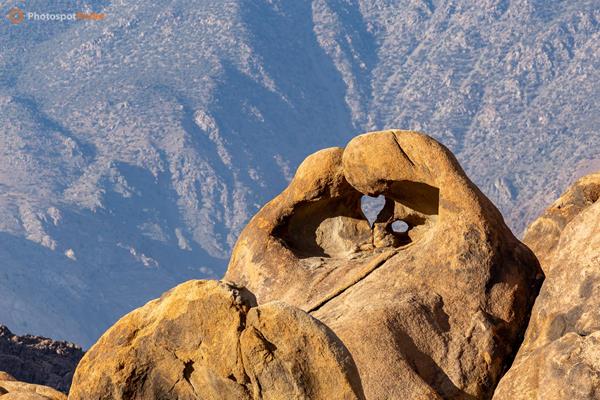
Movie Road Formations: Stretching along Movie Road, countless boulders and rock clusters provide nearly endless creative options. The terrain encourages exploration—small shifts in elevation or angle can produce entirely new perspectives. Early and late daylight hours sculpt the landscape with long shadows that accentuate texture and depth. Whether capturing sweeping wide scenes or isolating abstract patterns in stone, this area rewards experimentation and a willingness to wander.
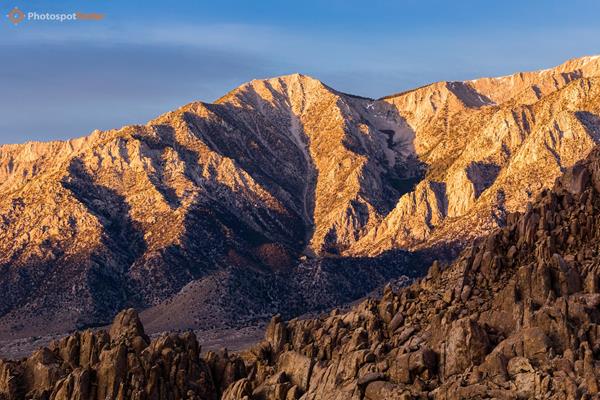
Whitney Portal & Background Peaks: From higher vantage points near Whitney Portal, expansive views reveal the dramatic meeting of rounded desert formations and jagged alpine summits. Mount Whitney dominates the skyline, providing a powerful backdrop for panoramic compositions. Sunrise is particularly captivating, as the first light spills across both foreground rock and distant peaks. Clear mornings offer crisp detail, while scattered clouds can introduce scale and atmosphere to wide-frame images.
Night Sky / Star Trails: Alabama Hills’ low light pollution makes it a prime location for photographing the night sky. Arches and boulders serve as compelling foreground anchors beneath expansive star fields. On moonless nights, the Milky Way rises brilliantly over the Sierra crest, while extended exposures can trace circular star trails above the landscape. Careful planning around moon phases and weather ensures optimal clarity and contrast in nighttime images.
Photography Considerations
Foreground elements such as arches, boulders, and desert vegetation anchor compositions and provide scale. Leading lines can be formed by rock ridges, trails, or gaps between boulders. Fog, clouds, or low-hanging mist enhances mood and adds depth. Sunrise and sunset provide the most dramatic lighting, while moonlit nights allow long-exposure night photography.Recommended gear includes wide-angle lenses for arches and panoramic landscapes, telephoto lenses for distant formations or mountain views, and a tripod for long exposures. Polarizing filters help reduce glare and enhance sky color, while neutral density filters allow creative long exposures. Patience is key for capturing optimal light, shadows, or night sky compositions. Exploring multiple angles from roads, trails, and boulder clusters maximizes compositional variety.
Visitor Tips & Key Notes
Plan visits for early morning or late afternoon for the best lighting. Trails range from easy walks to moderate climbs; appropriate footwear, sun protection, and water are essential in this desert environment. Seasonal variations provide unique photographic opportunities: snow-capped peaks in winter, warm rock colors in summer, and softer desert light in spring and fall.Photographers can explore arches, boulder fields, and viewpoints for diverse perspectives. Revisiting locations under different lighting, cloud, or moon phases increases compositional variety. Use our interactive map, images, and other resources to plan efficient photography sessions. Sharing experiences or insights in our comment section helps other photographers discover new angles and enjoy Alabama Hills’ iconic desert landscapes.